
By Norman Yousif, CEO, Off The Charts
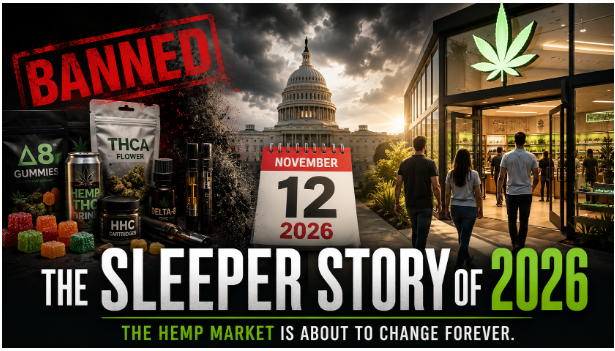
I want to say something that will sound self-serving and probably is, at least in part. On November 12, 2026, I expect my stores to get busier. Not because of anything I did. Because of something Congress did a year ago that almost nobody in the mainstream press has covered seriously.
Here is what is happening. In November 2025, buried inside a massive federal appropriations bill that ended the longest government shutdown in American history, Congress rewrote the definition of “hemp.” The change is technical, but the consequence is not. Starting November 12, 2026, roughly 95% of the intoxicating hemp products currently sold in the United States become federally illegal overnight. Delta-8 gummies at the gas station, THCA pre-rolls at the vape shop, hemp-derived THC beverages at the bar, HHC cartridges sold online and shipped to your door. Gone. Not phased out. Gone. The standard that made all of this possible, the 2018 Farm Bill’s narrow focus on delta-9 THC as a percentage of dry weight, created what everyone in the industry calls the hemp loophole. The intent was to legalize industrial hemp: fiber, grain, seed oil. The reality was that the language left a gap wide enough to drive a semi through.
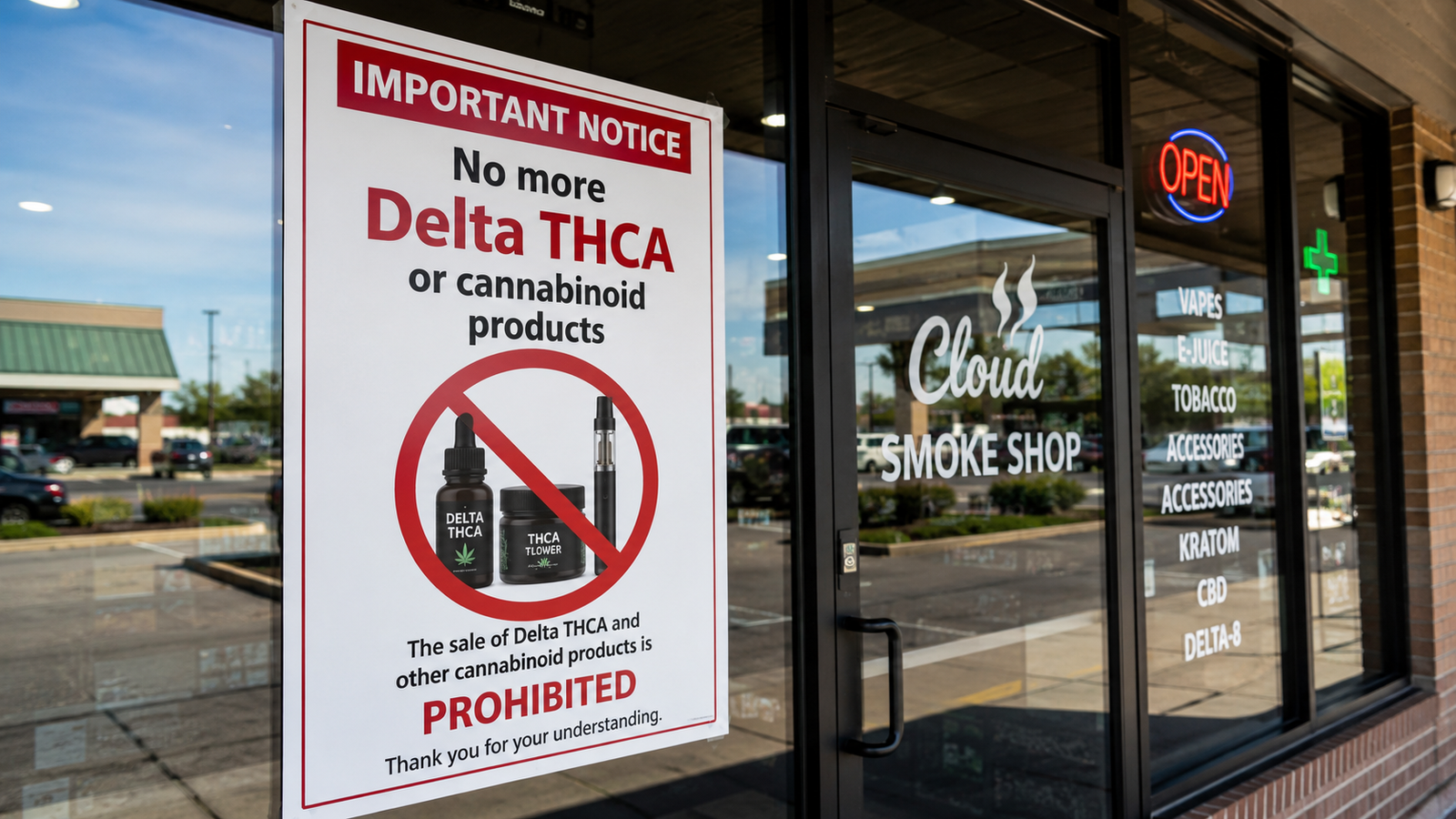
Manufacturers quickly figured out they could convert CBD into delta-8 THC through chemical synthesis, produce THCA flower that converts to full-strength THC when smoked, and formulate delta-9 gummies that squeezed under the percentage threshold by using a heavy enough carrier. Products that got you meaningfully high, sold at convenience stores, without age verification, without independent lab testing requirements that match what licensed cannabis operators must meet, and without any of the compliance infrastructure that my stores carry as a cost of doing business every day.
The new law replaces the old delta-9 standard with a total THC measure and caps finished consumer products at 0.4 milligrams of total THC per container. To understand how strict that is: a standard dispensary edible contains 5 to 10 milligrams per serving. The new cap is 0.4 milligrams for the entire package. That is not a new standard for intoxicating products. That is the effective elimination of intoxicating hemp products as a commercial category.
What This Means for My Business, Honestly
I started a retail cannabis business in California. California already has legal adult-use cannabis. My customers were never relying on hemp products for access the way someone in Texas or Florida might have been. In that sense, November 12 will not feel like a dam breaking for me the way it might for an operator in a newer market.
But I have been competing with the hemp market for years in ways that people outside the industry do not fully appreciate. THCA flower in particular became direct competition for cannabis flower. A customer who could walk into a smoke shop, pay less, skip the licensed channel entirely, and come home with a product that functioned identically to what I sell, without my regulatory overhead baked into the price, is a customer I did not get. The hemp market drew consumers who might otherwise have found their way to licensed retail, kept them in an unregulated channel, and priced them away from us on the margin.
When that option closes on November 12, some portion of those customers will look for a substitute. The only legal substitute is a licensed dispensary.
I want to be careful not to overstate this. Demand displacement is real but it is not automatic. Some hemp consumers will simply stop buying. Some will find their way to illicit sources. Some live in states where no licensed dispensary is accessible. The November ban is not a referral program. Nobody is mailing me a list of former delta-8 customers.
But some meaningful share of those consumers will walk into a licensed store for the first time, or for the first time in a while, because the thing they were used to buying no longer exists. That is a genuine opportunity. Whether the licensed industry captures it or fumbles it depends entirely on what we do next.
The Part My Industry Should Be Uncomfortable With
There is something I find genuinely difficult to celebrate about the hemp ban, and I think it matters to say it plainly.
The hemp market grew as large as it did because it was more convenient and cheaper than what I offer. Some of that gap was because hemp operators did not carry the same regulatory costs. But some of it was because the licensed cannabis industry, including my own stores, has not always made it easy to be a customer. The prices are higher than they need to be. The checkout experience has friction. The payment options are limited. The educational experience varies wildly by location and by who happens to be working the counter that day.
If a consumer who spent four years buying delta-8 gummies at a gas station walks into a licensed dispensary for the first time in November and encounters a confusing menu, a long wait, a $3 ATM surcharge because we still cannot accept credit cards, and a budtender who cannot explain the difference between products clearly, we will lose them. They will find another workaround or stop buying entirely. The hemp ban does not guarantee us anything. It gives us a window.
The Safety Case, Which Is Real
The public health argument for closing the loophole is legitimate, and I want to give it more than lip service.
Hemp-derived THC products were sold for years with no consistent federal testing standards, no required age verification, no batch-level contaminant testing comparable to what every licensed cannabis product in California must pass, and no traceability. The 2019 Farm Bill created those categories not out of public health thinking but out of a legislative drafting oversight, and the market that grew up around them reflected that origin. Products sold online with no age check to a customer in a state that still criminalizes cannabis. Products with inconsistent labeling and potency. Products that ended up in the hands of children at rates that alarmed pediatric emergency physicians.
The licensed channel is objectively safer. That is not marketing language. It is the result of a compliance infrastructure that costs my business real money and exists because regulators required it. The hemp market operated without that infrastructure for seven years. Closing that gap is the right policy outcome, even for people who have no stake in licensed cannabis retail.
What Comes Next
The ban takes effect in less than five months. Congress may still act to delay or modify it, and several legislative proposals are moving. If the ban is delayed, everything I have written above gets pushed back accordingly. But as of today, November 12 is the date.
My industry should be preparing for an influx of consumers who have never interacted with licensed retail before, or who left it because the alternatives were cheaper and easier. The question is whether we meet them with something worth staying for: better pricing, better education, a retail experience that does not feel like a chore, and honest conversation about what the products actually do.
The hemp market grew to nearly $28 billion by meeting consumers where they were. The licensed market has a chance to do the same. That chance expires the moment someone new walks in and decides we are not worth the difference.
I intend to be ready.
About Me
Hello! I am Norman Yousif, CEO of Off The Charts dispensary, a licensed cannabis retailer in California. I write about cannabis policy, regulation, and the business of legal cannabis from the perspective of an operator working within one of the country’s most complex regulatory environments.