
One Thing We Know About Cannabis: We Don’t Know Everything
Cannabis strain names can sound precise, but the history behind those names is often anything but simple. Decades of prohibition, underground breeding, seed trading, clone swapping, lost records, accidental mislabeling, and straight-up marketing have created a cannabis family tree with plenty of missing branches.
Some famous strains have well-documented breeders and parent genetics. Others come with competing origin stories. A few have been renamed so many times that figuring out what the original plant actually was can feel like cannabis genealogy with half the family refusing to talk.

Cannabis Did Not Grow Up With Good Record Keeping
Modern cannabis breeding developed under unusual conditions. For much of the last century, marijuana cultivation was illegal throughout the United States and many other countries. Breeders were not exactly filing detailed agricultural records with universities.
Plants moved through underground networks. Seeds were mailed, traded, carried across borders, passed between friends, or collected during international travel. Clones could move from one grower to another with little more than a handwritten label attached. That underground culture produced some legendary cannabis genetics. It also made documentation difficult.
When a breeder created something special, the strain’s history might have existed only in notebooks, old seed catalogs, magazine interviews, forum posts, or the memories of people involved. Sometimes those records survived. Sometimes they didn’t. That is one reason researching the history of the Emerald Triangle and other major growing regions is important. Cannabis genetics developed alongside an underground culture that rarely had the luxury of formal documentation.
A Strain Name Is Not a Genetic Certificate
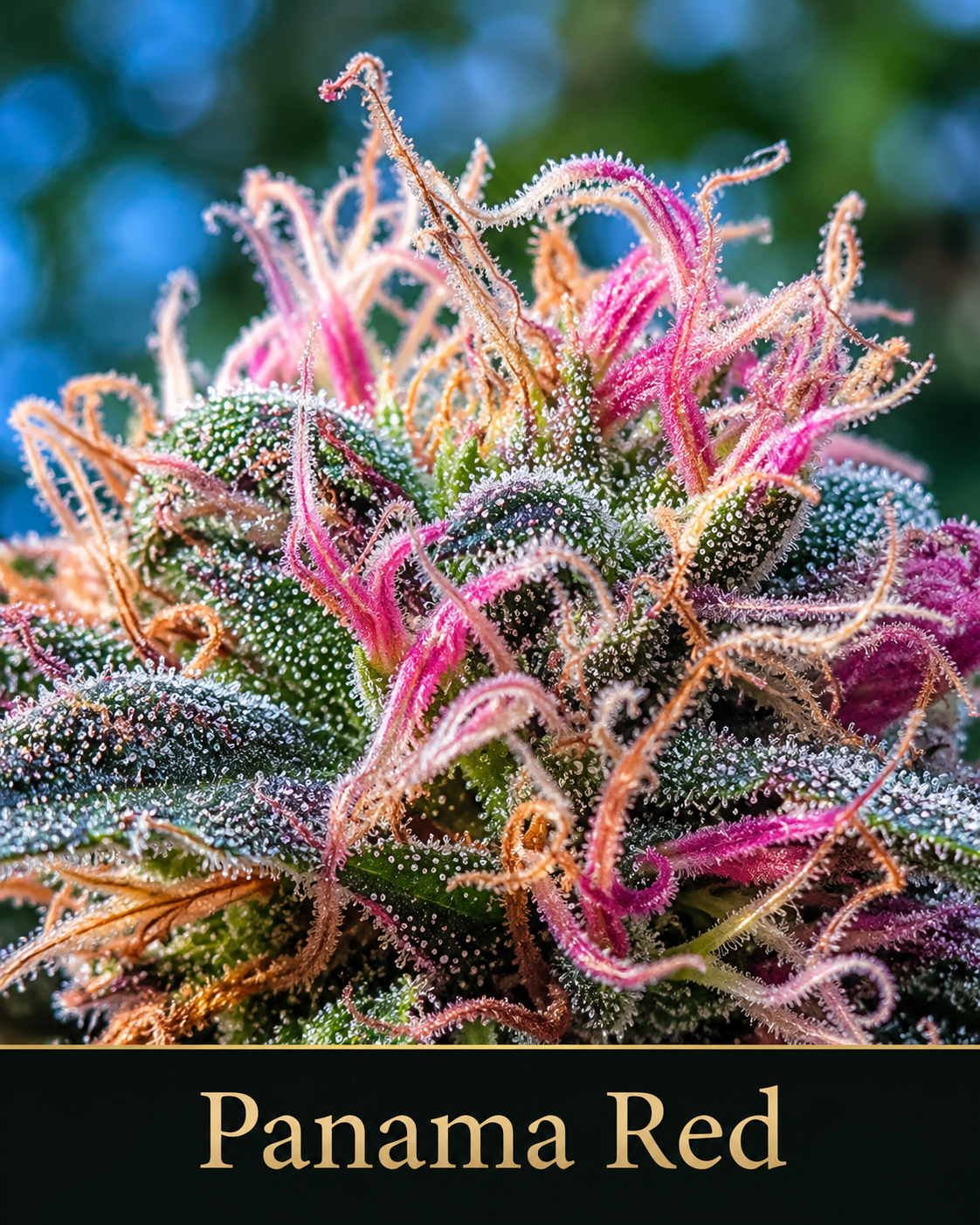
This is probably the biggest thing cannabis consumers should understand.
A strain name does not automatically prove that two plants have the same genetics.
A 2015 cannabis genetics study published in PLOS ONE compared plants carrying identical strain names. In several comparisons, plants with the same name were actually more genetically similar to plants carrying different names.
Another study examining commercially available cannabis strains found genetic inconsistencies among samples sold under the same strain names. That does not mean every strain name is fake.
Some cultivars are remarkably stable, especially when a specific plant has been preserved through cloning. But the name printed on a jar alone cannot tell you the complete genetic history of that flower.
Seeds Make Strain History Even More Complicated
Clones are cuttings from an existing plant, so they are essentially copies of that individual plant.
Seeds are different.
Two seeds produced by the same parents can express different combinations of traits. Breeders may grow dozens or hundreds of seedlings and select one particular plant, commonly called a phenotype or “pheno,” that they want to preserve.

If that selected plant becomes famous, things can get confusing when other people grow seeds from similar parents and use the same strain name.
Those plants may be related… but they are not necessarily the exact plant that originally made the strain famous.
This distinction becomes especially important with old seed lines that disappeared, were recreated, or were crossed into newer genetics.
Then There Is Renaming
Cannabis naming can get weird fast.
A grower receives a clone. Someone shortens the name. Someone else spells it differently. Another grower crosses it and keeps part of the original name. A dispensary changes the name because something else sounds cooler.
Twenty years later, five versions of the story are floating around online.
That sounds ridiculous: but it is exactly the kind of environment cannabis genetics developed in.
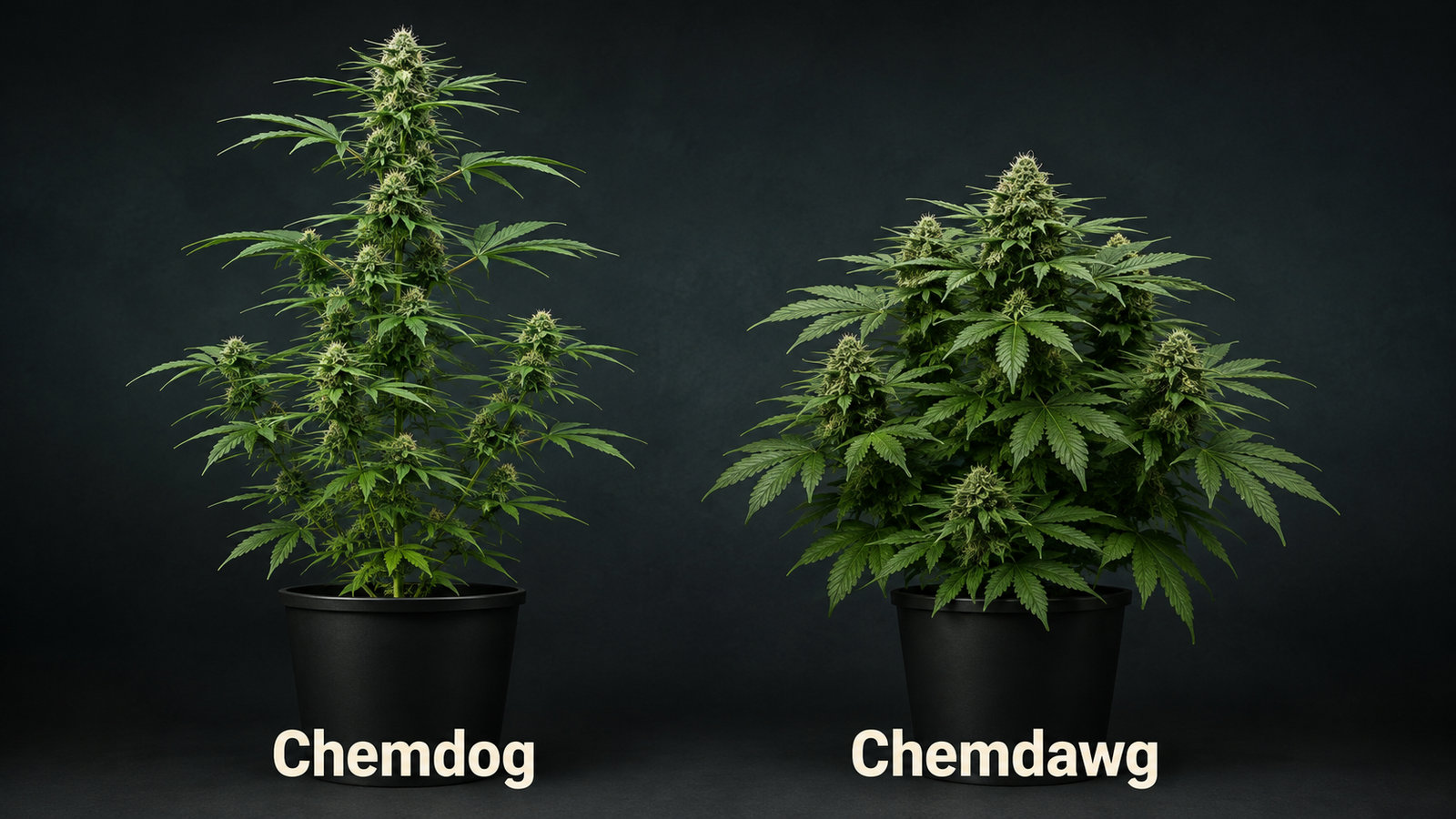
Researchers have even noted simple spelling variations surrounding famous genetics such as Chem Dog, Chemdog, and Chemdawg. Those small differences can eventually become accepted names of their own.
Marketing makes things even messier. A recognizable strain name can sell better than “Mystery Plant #7,” so there has always been an incentive for questionable genetics to inherit a famous name.
Sativa, Indica, and Hybrid Labels Don’t Solve It
The traditional sativa, indica, and hybrid system can provide some historical context, but it does not solve the strain identity problem either.
Modern genetic research has shown that commercial plants labeled sativa and indica do not always separate neatly into those categories genetically.
USAWeed has gone deeper into this topic in our guides to sativa vs. indica vs. ruderalis and why indica vs. sativa can be an outdated way to judge cannabis.
Modern cannabis has been crossed so extensively that lineage, breeder information, chemical testing, and documented provenance can often tell a much more useful story.
So What Makes a Cannabis Strain History Credible?
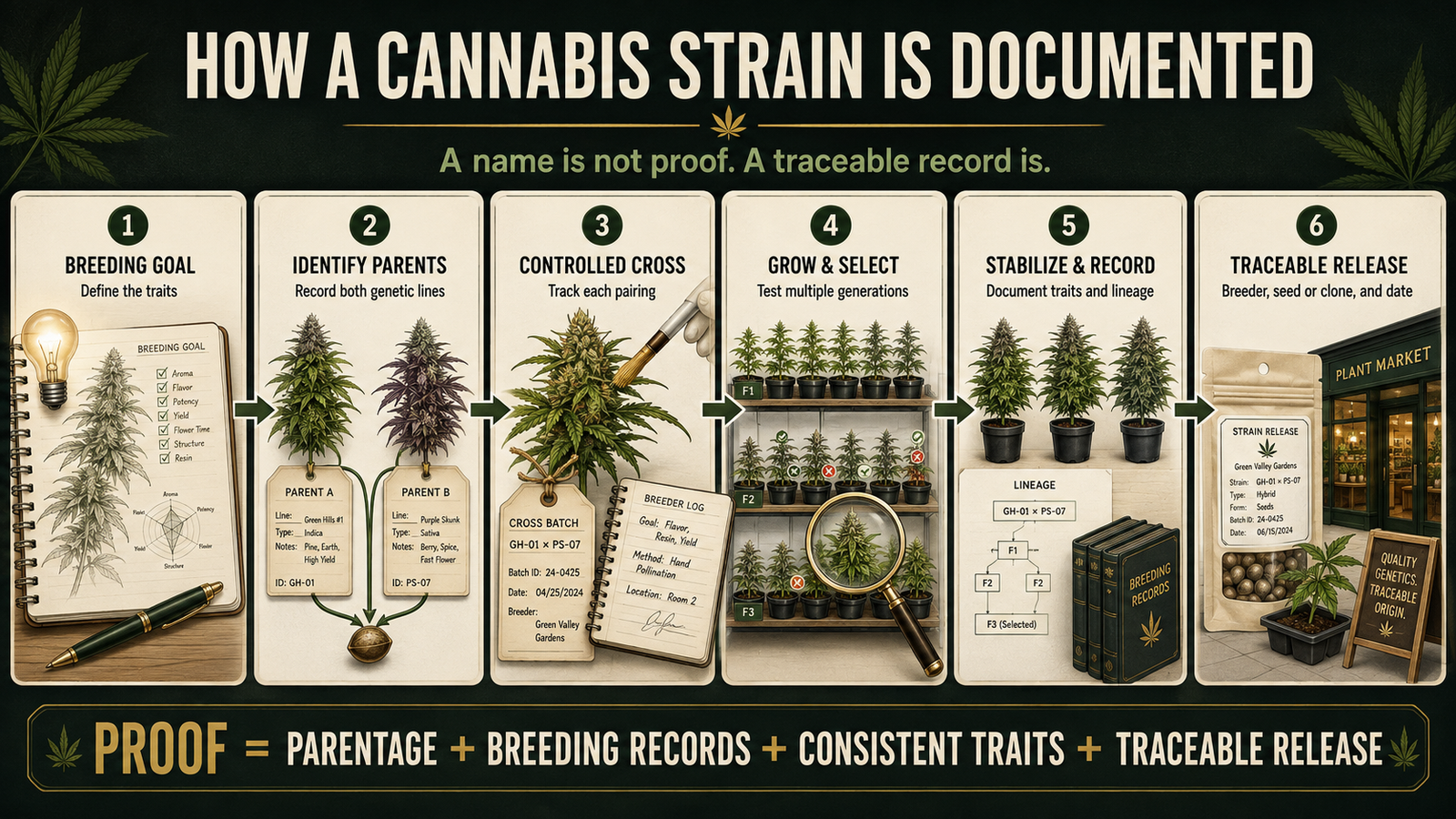
No single piece of information proves everything. Strong strain documentation usually comes from several pieces fitting together.
- A known breeder or breeding group connected to the original release.
- Documented parent genetics with a believable breeding timeline.
- Original seed releases or preserved clones connected to that breeder.
- Old catalogs, interviews, photographs, articles, or grow records that support the history.
- Multiple independent sources telling roughly the same story.
- Genetic testing when reliable comparison material is available.
The farther a strain gets from its original breeder, seed stock, or verified clone, the harder absolute claims become.
Unknown Origin Does Not Mean a Strain Is Bad
This point matters.
A strain with uncertain ancestry can still be excellent cannabis.
“Unknown origin” simply means the historical evidence is incomplete.
There is nothing wrong with saying that.
In fact, an honest “origin uncertain” is more useful than inventing a detailed family tree because somebody repeated the same story on ten websites.
Cannabis history deserves the same treatment as any other cultural history. Separate what is documented from what is believed, repeated, claimed, or simply unknown.
The Strain Brain Is Building That Cannabis History
This is where dedicated cannabis genetics archives become valuable.
The Strain Brain focuses on historical cannabis genetics and provenance. The goal is not simply to collect cool strain names. It is to help trace where cannabis varieties came from, who bred them, which parent genetics are documented, what came from known seed lines, and where the historical trail becomes uncertain.
For longtime cannabis enthusiasts, breeders, growers, or anyone who has ever wondered whether the “original” version of a famous strain is actually original, it is a rabbit hole worth exploring.
Because sometimes cannabis history gives us a clean family tree.
Sometimes it gives us three breeders, four spellings, two supposed mothers, a clone somebody brought back from a concert in 1993, and absolutely no paperwork.
That’s part of what makes cannabis history fascinating.

Preserving Cannabis Genetics Means Preserving the Story
As legal cannabis becomes more professional, documenting genetic provenance becomes increasingly important. Breeder names, seed releases, old clones, photographs, interviews, and firsthand accounts can disappear surprisingly quickly.
Recording those details now gives future cannabis enthusiasts a better chance of separating documented history from industry folklore.
If you want to dig deeper into individual cultivars, original breeders, parent genetics, historical seed lines, and strains with uncertain origins, explore The Strain Brain.
And when you’re ready to explore cannabis beyond its family tree, you can find great, safe, and tested products and cannabis-friendly resources here on USAWeed.org.