
The Bong: A Brief History of the Water Pipe
The bong is a water pipe with roots that stretch across Africa, Asia, and Eurasia. Archaeological finds suggest people used early water pipes centuries before modern cannabis culture. Today’s glass bong grew popular during the counterculture era and later became a functional form of glass art.
Few cannabis accessories are as recognizable as the bong. You can spot one across a room, even when it looks more like a chemistry experiment than a smoking device.
Modern bongs come in countless shapes, sizes, and materials. However, the basic idea is old. Smoke travels through water before reaching the user. The exact origin remains debated, but archaeological evidence shows that water pipes have a much longer history than most people realize.

Quick Summary

- The history of the bong includes early water pipes found across Africa, Asia, and Eurasia.
- The word “bong” likely comes from a Thai term for a bamboo tube or pipe.
- Ancient gold vessels found in Russia contained traces linked to cannabis and opium.
- Modern glass bongs became part of Western cannabis culture during the 1960s and 1970s.
- Bong water cools smoke, but it does not make smoking risk-free.
What Is a Bong?
A bong is a type of water pipe commonly used to smoke cannabis. Most designs include a bowl, downstem, water chamber, and mouthpiece. Some models also include a carb hole, removable bowl, ice catcher, or percolator.
When a person inhales, smoke moves through the downstem and bubbles through the water. The water cools the smoke before it enters the main chamber. This cooling effect can make the smoke feel less hot or harsh. However, a smoother feeling does not mean the smoke is harmless. The CDC’s cannabis and lung health information explains that cannabis smoke can affect lung tissue regardless of the device used.
Where Did the Word “Bong” Come From?
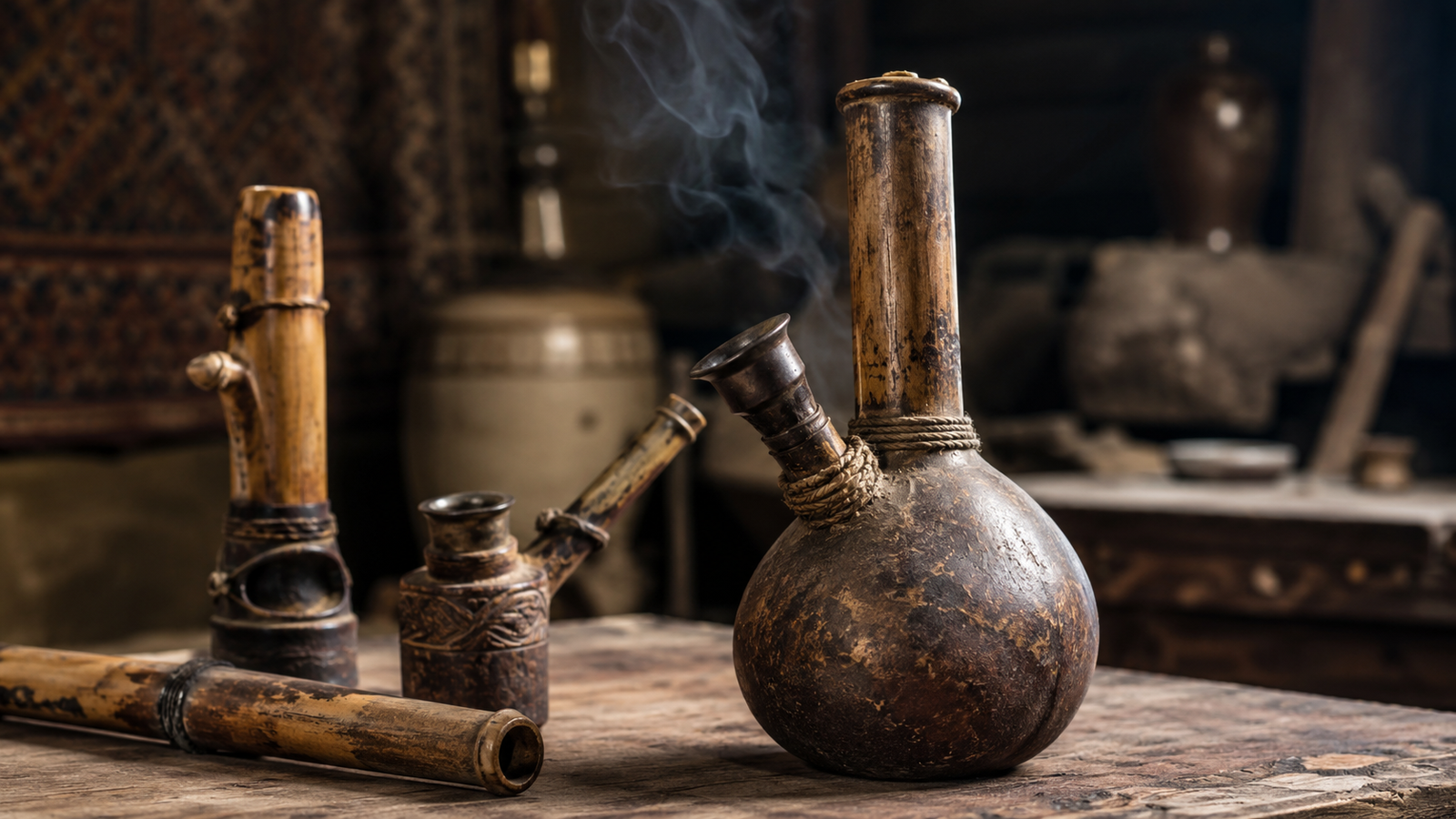
The English word “bong” is generally connected to the Thai word baung or bong. The term describes a cylindrical bamboo tube, container, or smoking pipe.
Bamboo was a practical material for early pipes because it was hollow, lightweight, and widely available in parts of Southeast Asia. A simple bamboo water pipe could be made without a glass studio, power tools, or an online accessory store.
The word entered American slang during the 1960s, according to the Online Etymology Dictionary. The device itself, of course, existed long before the English name became popular.
Ancient Water Pipes in Africa
Some of the strongest evidence for early cannabis water pipes comes from Africa. Archaeologists uncovered ceramic smoking pipes in caves near Lalibela, Ethiopia. Testing on some pipe bowls found cannabis residue.
These pipes are generally dated to around the 13th or 14th century. Older articles sometimes claim they date to 1400 B.C., but current discussions of the evidence usually place them much later.
The African discoveries matter because they challenge the idea that the bong has one simple origin story. Different cultures may have developed water-based smoking tools independently, using the materials and plants available to them.
The 2,400-Year-Old Gold Vessels
One of the most famous discoveries connected to bong history happened in southern Russia. Archaeologists found ornate gold vessels inside a Scythian burial mound. The artifacts were about 2,400 years old.
Residue analysis reportedly detected cannabis and opium on the vessels. Some news reports quickly called them “gold bongs.” That nickname is catchy, but archaeologists cannot confirm that the vessels worked exactly like a modern water pipe.
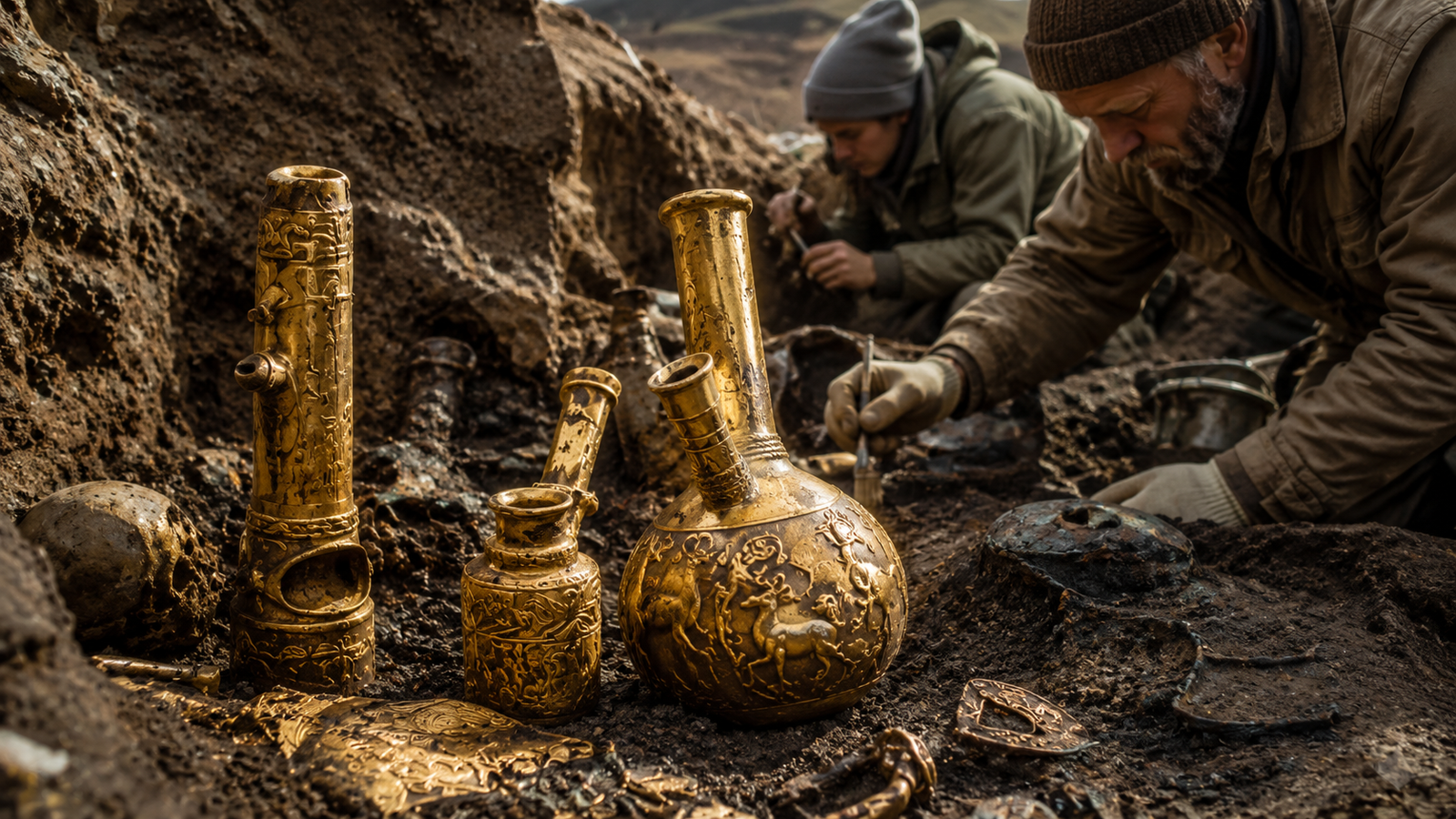
They may have supported ritual smoke or vapor ceremonies among Scythian leaders. Either way: the discovery shows that cannabis use and elaborate smoking traditions existed in ancient Eurasia.
The Scythians were nomadic groups who traveled across large parts of the Eurasian steppe. Greek historian Herodotus also described Scythians using cannabis in enclosed purification rituals, although his account did not describe a modern bong.
Water Pipes Across Asia
Water pipes also developed across India, Persia, China, Thailand, Laos, and nearby regions. Some were made from bamboo. Others used metal, ceramic, wood, or combinations of different materials.
Many Asian water pipes were used for tobacco after tobacco spread through global trade routes. Cannabis, hashish, and other herbs were also used in certain regions and cultural settings.
The Silk Road helped move goods, customs, and smoking traditions between Asia, the Middle East, Africa, and Europe. It would be too simple to say one country invented every form of water pipe. The bong has a global family tree, and some branches remain hazy.
How Glass Changed Bong Culture
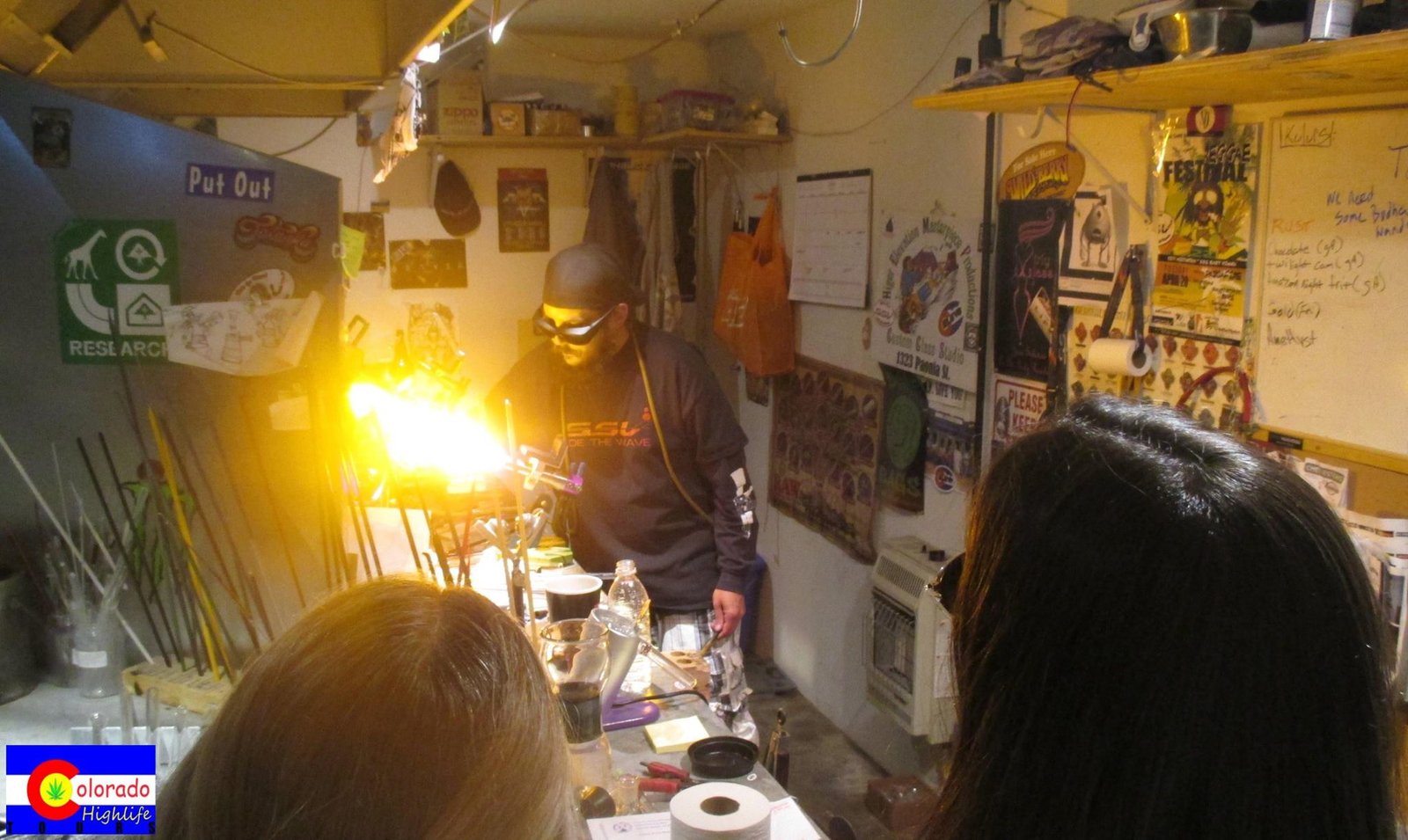
Humans have produced glass for thousands of years, but modern glassblowing tools made detailed smoking pieces easier to create. Borosilicate glass became especially useful because it handles heat better than many ordinary types of glass.
Glass bongs gained visibility in North America during the 1960s and 1970s. Cannabis culture was becoming more public, and artists started experimenting with colorful pipes, water chambers, and sculptural designs.
Glass artist Bob Snodgrass became an important figure in the American glass-pipe movement. He is widely associated with popularizing silver fuming, a method that uses metal vapors to create shifting colors inside glass.
That artistic movement helped transform the bong from a basic smoking tool into collectible functional glass. Modern artists now create everything from simple scientific-style tubes to pieces that belong in a gallery… just preferably not near the edge of a coffee table.
Modern Bong Materials and Designs
Today’s water pipes are commonly made from several materials:
- Borosilicate glass: Popular for visibility, flavor neutrality, and artistic design.
- Silicone: Flexible, portable, and less likely to break during travel.
- Acrylic: Lightweight and usually more affordable than glass.
- Ceramic: Often decorative, sturdy, and heavier than other options.
- Metal: Durable, but less common for full-size modern bongs.
Buyers should consider stability, cleaning access, joint quality, bowl size, and replacement-part availability. Our guide on what to look for in a bong explains the practical features that matter before making a purchase.
Do Bongs Filter Cannabis Smoke?
Bong water can cool smoke and capture some ash and particles. It does not remove every unwanted compound produced when cannabis burns.
Water filtration may change the temperature and feel of the smoke, but people should not assume that a bong makes combustion safe. Large hits can still deliver a significant amount of smoke at once.
Dirty bong water can develop odor, residue, and microbial buildup. Follow our step-by-step bong cleaning guide to keep the chamber, bowl, and downstem in better condition.
The Bong’s Place in Cannabis Culture
The bong has survived because the design is simple, adaptable, and easy to personalize. It can be made from basic bamboo or shaped into a complex glass sculpture with multiple chambers and percolators.
Its history also reflects the wider history of cannabis. Water pipes moved through trade routes, rituals, counterculture movements, glass studios, and modern legal markets.
Researchers may continue debating which artifact deserves the title of the world’s first bong. What seems clear is that people have experimented with water-cooled smoking devices for centuries, and possibly through several separate cultural traditions.
For more information about glass quality and responsible accessory use, read our guide to the safety of smoking glass pipes.
Final Thoughts
The modern bong did not suddenly appear during the Summer of Love. Its story reaches across continents and cultures, from African ceramic pipes and Asian bamboo tubes to Scythian gold vessels and American glass art.
The bong may look different today, but the main concept remains familiar: a bowl, a chamber, water, and airflow. Adults who choose to use one should understand local laws, keep the device clean, and remember that cooler smoke is still smoke.
Explore USAWeed.org to find great, safe, and tested products while discovering responsible cannabis-friendly options for your next adventure.
It’s interesting to know that glass water pipes are relatively new when it comes to recreational drugs. I’ve recently had my first experience with marijuana and while I don’t think it will be a regular thing, I am not opposed to the idea of doing it again some time. I think I should try it with a water pipe next time. I better start looking if I could buy one online.