
Bye bye, senses.
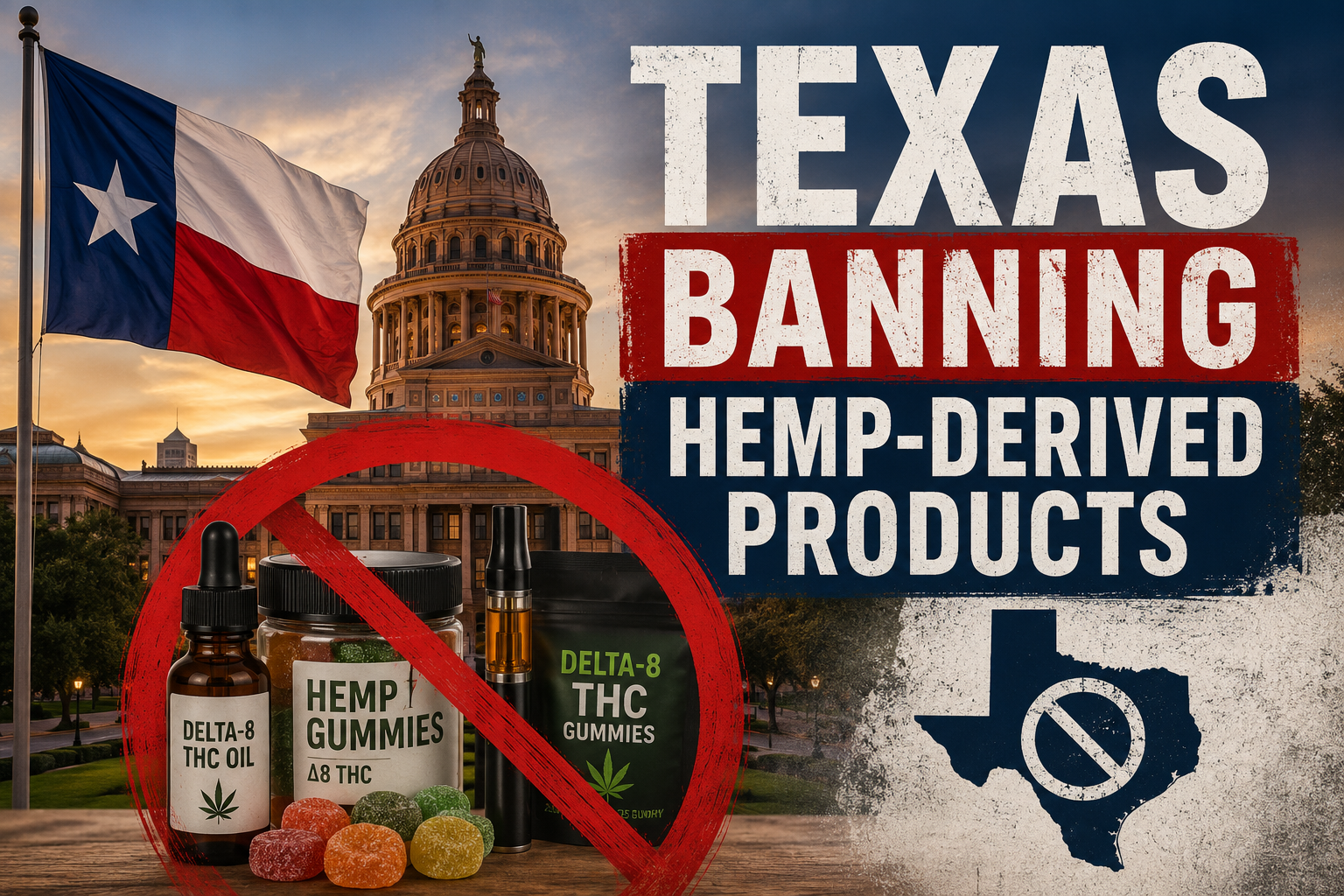
Texas is saying bye-bye to a large part of its intoxicating hemp market. Starting July 31, 2026, products containing delta-8 THC and several related cannabinoids face removal from legal store shelves. Apparently, the Lone Star State looked at regulation, testing, age limits and consumer education… then reached for the reverse gear.
What Is Texas Actually Banning?
The new crackdown does not erase every hemp product from Texas. However, it does target several popular intoxicating cannabinoids that have been sold through smoke shops, hemp stores and online retailers.
According to the Texas Consumable Hemp Program, delta-8 THC is treated as a controlled substance unless it appears only in naturally occurring trace amounts. The state’s restored controlled-substance definitions take effect on July 31, 2026.

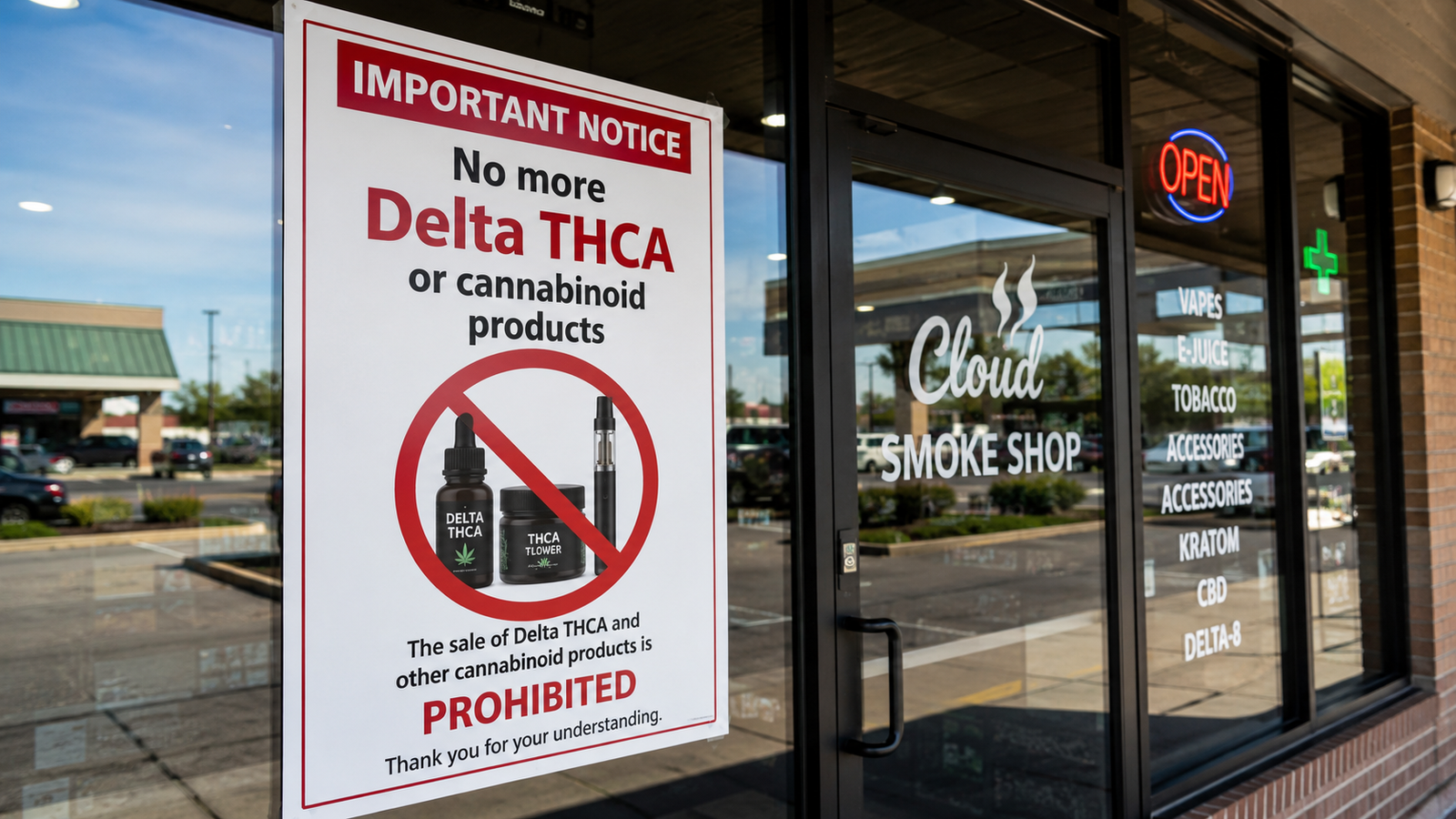
Products labeled as containing delta-8 THC may be detained and referred to law enforcement. The broader definition may also affect products containing delta-10 THC, THCP and other psychoactive THC variants.
Meanwhile, consumable hemp products may still contain delta-9 THC at no more than 0.3% by dry weight. So yes, Texas has created a cannabinoid obstacle course where one form of THC may qualify while another gets escorted out of the building.
Texas Tried a Ban, Vetoed It, Then Found Another Route
This story did not begin in July 2026.
In 2025, Texas lawmakers approved Senate Bill 3, which would have created a much wider ban on consumable hemp THC. Governor Greg Abbott vetoed that bill and called for tighter regulation instead of broad prohibition.
At the time, the hemp industry celebrated. USAWeed covered how Texas lawmakers backed off the hemp THC ban. It looked like the state might finally build a regulated adult market with testing, age verification and sensible limits.
That peaceful moment lasted about as long as an unattended plate of barbecue at a family reunion.
Texas regulators introduced stricter testing rules, packaging requirements and major licensing fee increases. A Texas Supreme Court decision then cleared the way for the state to restore its older interpretation of delta-8 THC and related compounds.
The original legislative ban did not become law. Yet many products are leaving shelves anyway. Texas has decided, that going around the front door still counts as arriving.
Why Hemp Businesses Are Not Laughing
The political comedy has real business consequences.
Retailers now have to inspect products, certificates of analysis, cannabinoid formulas and labels. Inventory that was treated as legal one week may become a major liability the next.
The state has also increased annual licensing fees. Consumable hemp product licenses now cost $10,000 per location, while retail hemp registrations cost $5,000 per location. Those numbers may be manageable for a national chain. They are far more serious for a family-owned store in a small Texas town.

Supporters of strict rules argue that the intoxicating hemp market needs stronger oversight. That is a fair conversation. Products should have reliable testing, accurate labels, child-resistant packaging and firm age restrictions.
However, regulation and elimination are not the same thing.
A well-regulated market gives adults access to tested products while creating rules for manufacturers and sellers. A ban removes compliant businesses and assumes demand will politely disappear. History suggests demand rarely reads government announcements.
The Regulated Market Shrinks, but Demand Does Not
Texas adults who previously purchased delta-8 gummies, vapes or other hemp products may not simply lose interest on July 31. Some may switch to compliant delta-9 products. Others may shop across state lines, order from questionable sellers or turn to unregulated sources.
That is the awkward part of prohibition. The legal shelf becomes empty, while the underground shelf somehow stays fully stocked.
The policy also adds more confusion to the national debate over hemp-derived cannabinoid regulations. Consumers already face different THC limits, product rules and testing standards in nearly every state.
Texas could have helped create a clear adult-use model. Instead, it appears determined to compete for a spot on the list of the weirdest cannabis laws in America.
Is Texas Finished With Hemp THC?
Probably not.
Texas lawmakers have already discussed another attempt to ban consumable hemp products containing THC during the 2027 legislative session. That means the current rules may be only one chapter in a longer political fight.
The debate should include product safety, youth access, laboratory standards and honest labeling. It should also include hemp farmers, retailers, adult consumers and small business owners. A hearing about an entire industry works better when people from that industry are allowed into the conversation.
The numbers also deserve attention. Hemp-derived products support thousands of Texas businesses and workers. USAWeed previously examined the real numbers behind intoxicating hemp and marijuana, including how quickly the hemp market grew in states without recreational cannabis sales.
What Texas Consumers Should Do Next
- Check product labels for delta-8 THC, delta-10 THC, THCP and similar cannabinoids.
- Review current Texas rules before buying, carrying or traveling with hemp products.
- Ask retailers for recent third-party laboratory results.
- Do not assume a product is legal because it was available last month.
- Never drive while impaired or use intoxicating products in prohibited public places.
Rules can change quickly, and local enforcement may vary. Travelers should check official state information before packing hemp products for a Texas trip.
Bye-Bye, Common Sense?
Texas had several choices. It could regulate potency. It could enforce age limits. It could demand independent testing, clear serving sizes and responsible packaging.
Instead, the state is removing popular cannabinoids while keeping marijuana illegal and leaving adults with fewer regulated options. That is not exactly forward motion.
Maybe Texas is not racing backward. Maybe it is performing a highly complicated legal three-point turn that only looks backward from every available angle.
Wherever you travel, follow local laws and look for great, safe and tested products through USAWeed.org.