
A plant nutrition schedule is the process of providing plants with the nutrients they need at the right time in an accurate and balanced way to support their growth, development, and production. Just as humans need different nutrients at different stages of life, plants also need specific nutrients throughout germination, vegetative growth, blooming, and fruit production.
A well-planned nutrition strategy ensures plants receive the proper nutrients at the right time, which leads to stronger growth, higher yields, and better adaptability to environmental stress. This is where a methodical feeding approach makes all the difference. It provides growers with a reliable road map for producing stronger, more productive plants year after year.

What Nutrients Are Essential for Plant Growth?
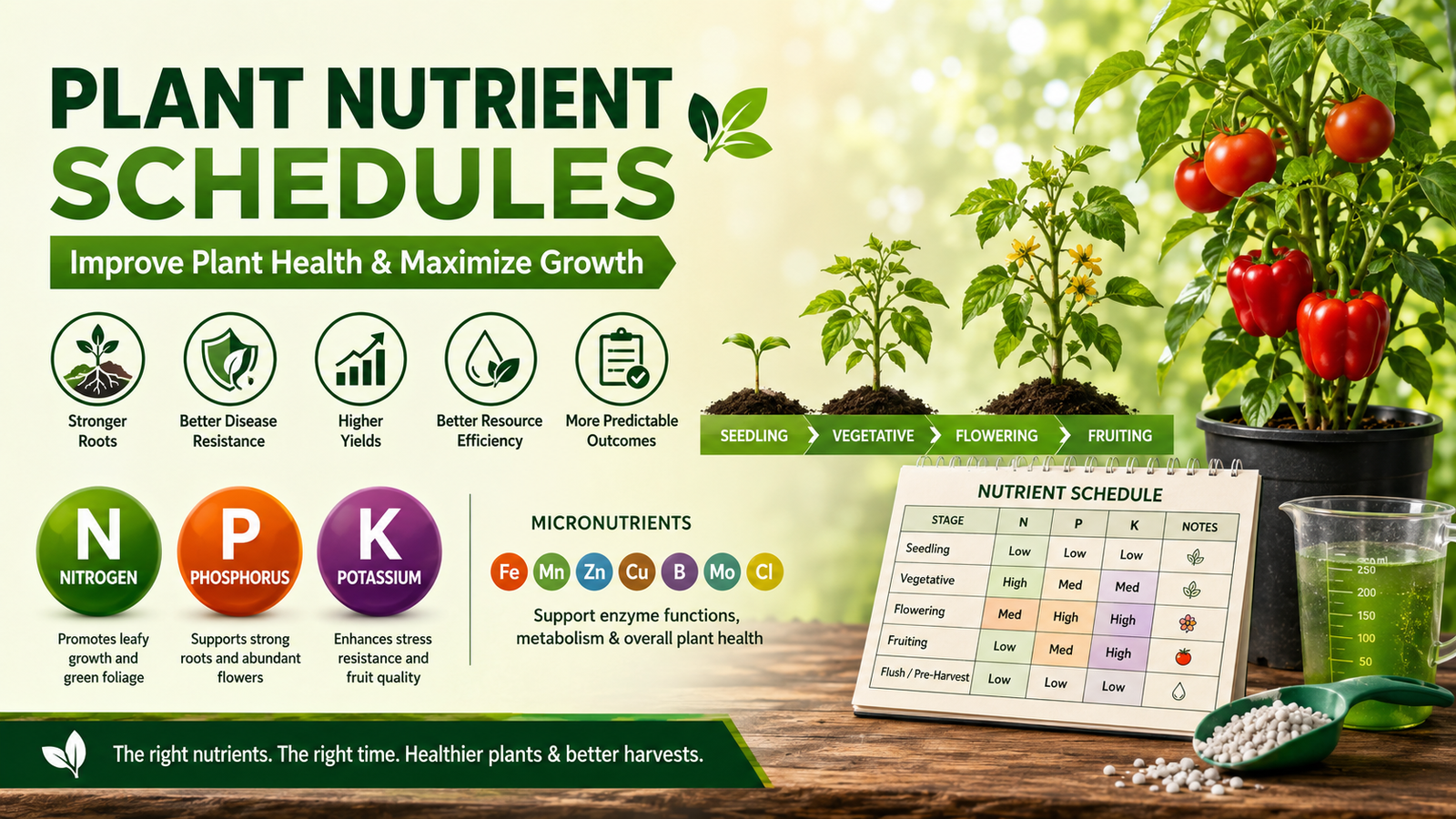
Plants need 16 vital nutrients to grow and develop to their maximum ability. These nutrients can be divided into macronutrients and micronutrients according to how much the plant needs.
- Macronutrients
Potassium, phosphorus, and nitrogen are the primary macronutrients needed in larger quantities for plant growth and development. Macronutrients provide the building blocks for energy transfer, metabolic processes, and plant structure.
- Micronutrients
Plants also require lesser amounts of micronutrients such as iron, manganese, zinc, copper, boron, molybdenum, and chlorine for different metabolic activities and enzyme functions. Micronutrients are important for specific enzyme activities and biochemical processes necessary for plant growth, development, and nutrient consumption.
These nutrients all have different functions. Nitrogen stimulates vegetative, leafy development. Both root systems and flowering are made stronger by phosphorus. Potassium improves immunity to illness and stress and controls water absorption. Yellowing leaves, weak stems, or poor fruit and flower growth are immediate symptoms of any one of these being absent or out of balance.
The Importance of Plant Nutrient Schedules
A nutrient schedule is an organized plan specifying the amounts and timing of nutrients plants should receive at different stages of growth. Proper plant nutrient schedules help eliminate guesswork and ensure that nutrient delivery aligns with the plant’s changing needs.
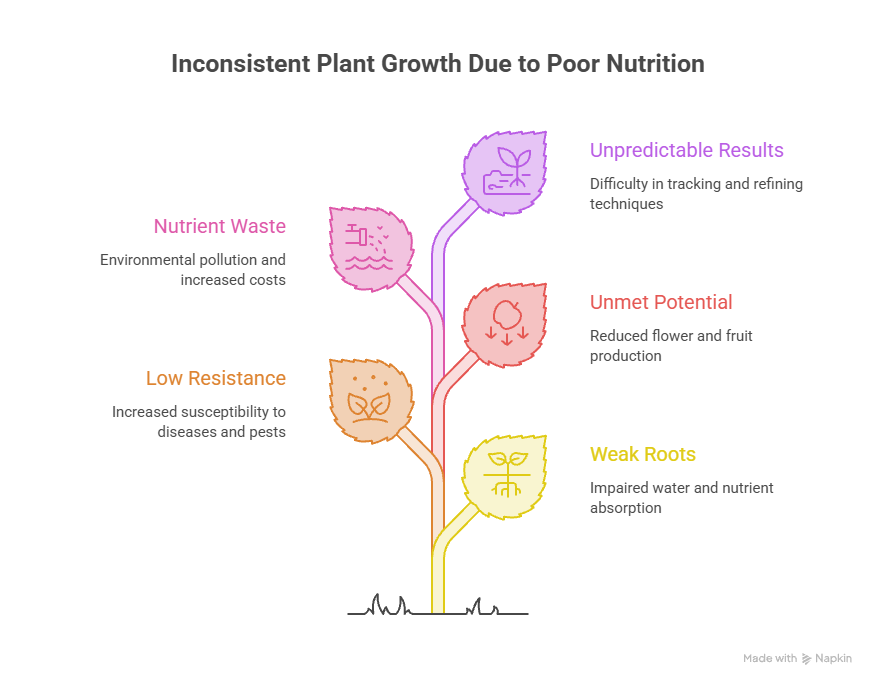
Without a proper nutrient schedule, plants can suffer from imbalances, toxicities, or nutritional deficiencies that can block growth and lower yield.
A proper plant nutrient schedule must include:
- When to increase nitrogen levels during vegetative growth to help leaves and stems develop.
- When to switch to potassium and phosphorus as plants approach flowering.
- How much taper feeding should be reduced before harvest to preserve quality and flavor.
- How to change concentrations based on the plant response.
This type of framework removes the unpredictability associated with growing and creates consistency that plants react favorably to.
What are the Benefits of Following a Plant Nutrient Schedule?
Growers who follow a consistent feeding schedule usually observe measurable improvements in almost every stage of plant performance. Here is how a plant nutrient schedule could benefit your cultivation:
- Stronger Root Development
A well-balanced early nutrition promotes strong, healthy root systems. Plants with strong roots are better able to absorb water and nutrients during each following stage of growth.
- Improved Disease Resistance
Plants with adequate nutrition develop denser tissue and more powerful defenses. As a result, they are much less prone to common diseases, mold, and pests that feed on weak, malnourished growth.
- Higher Yields
Plants can reach their maximum genetic potential when nutrition availability is matched to each growth stage. This leads to larger foliage, healthier flowers, and overall more plentiful, higher-quality harvests.
- Better Resource Efficiency
Applying nutrients only when plants actually require them reduces fertilizer waste and runoff. This reduces unnecessary costs and the environmental effect of each growing cycle.
- More Predictable Outcomes
Maintaining consistency during growing cycles enables problem-solving, results tracking, and refining feeding techniques. This leads to more reliable outcomes with each successive harvest.
It can be expensive and harmful to the environment to overfeed plants. Growers can minimize waste and runoff while maintaining ideal growth conditions by using structured plant nutrition schedules to apply exactly the amounts that are required.
How Do Nutrient Needs Change Throughout Growth Stages?
The fact that plant nutritional needs vary throughout time is one of the main reasons nutrient schedules work so well. Below are the different growth stages of plants that need to be maintained by a proper nutrient schedule:
- Seedling Stage
During their early growth stages, plants need relatively small amounts of nutrients. At this point, the focus should be on:
- Gentle nutrient concentrations
- Root establishment
- Balanced nutrient availability
Overfeeding can harm sensitive roots and limit growth.
- Vegetative Growth Stage
As plants start to grow leaves and stems, nitrogen becomes more important. Proper nutrition during this stage provides the following advantages:
- Strong stem development
- Larger leaf production
- Enhanced energy generation
Nitrogen is necessary for photosynthesis and the synthesis of chlorophyll, which fuel fast growth.
- Flowering and Fruiting Stage
Plants’ nutritional priorities change when they actually start to reproduce. Nitrogen becomes less important than phosphorus and potassium.
Proper nutrition during fruiting and flowering can:
- Increase the growth of flowers
- Enhance the size and quality of the fruit
- Support increased yields
- Improve taste and appearance
A carefully designed plant nutrient schedule helps ensure these changing requirements are met efficiently.
The Best Ways to Make Efficient Plant Nutrient Schedules
- Understand the plant nutritional requirements and change feeding schedules based on the type and species being grown.
- Change nutrient ratios according to growth stages. Increase nitrogen during vegetative growth and potassium and phosphorus during flowering or fruiting.
- Regularly test the soil or growing medium to identify nutrient levels, deficiencies, and pH imbalances.
- Use premium fertilizers and nutrient solutions that offer a balanced mix of macro and micronutrients.
- Keep accurate records of plant performance and feeding schedules to identify what works best and make sensible adjustments.
Conclusion
A well-planned nutrient plan is one of the best ways of improving plant health and growth. By providing important nutrients in the right proportions and at the right times, growers can support stronger roots, healthier foliage, better flowering, and increased yields. A carefully planned nutrient schedule can have a huge impact on achieving healthy and productive plants.