
TripAdvisor is not disappearing tomorrow, but its old travel-search machine is clearly under pressure. Search traffic has weakened, Google keeps more travelers inside its own ecosystem, and TripAdvisor is cutting costs while leaning harder on experiences. Pulling back hotel affiliate distribution is another sign that margins matter more than traffic growth right now.
The Old TripAdvisor Machine Is Getting Squeezed
For years, TripAdvisor had one of the sweetest positions in online travel. A traveler searched for a hotel, restaurant, or attraction. TripAdvisor ranked near the top of Google. The traveler clicked through, read reviews, then clicked again to Booking.com, Expedia, a hotel, or another booking partner. TripAdvisor got paid for helping move that traveler down the funnel.
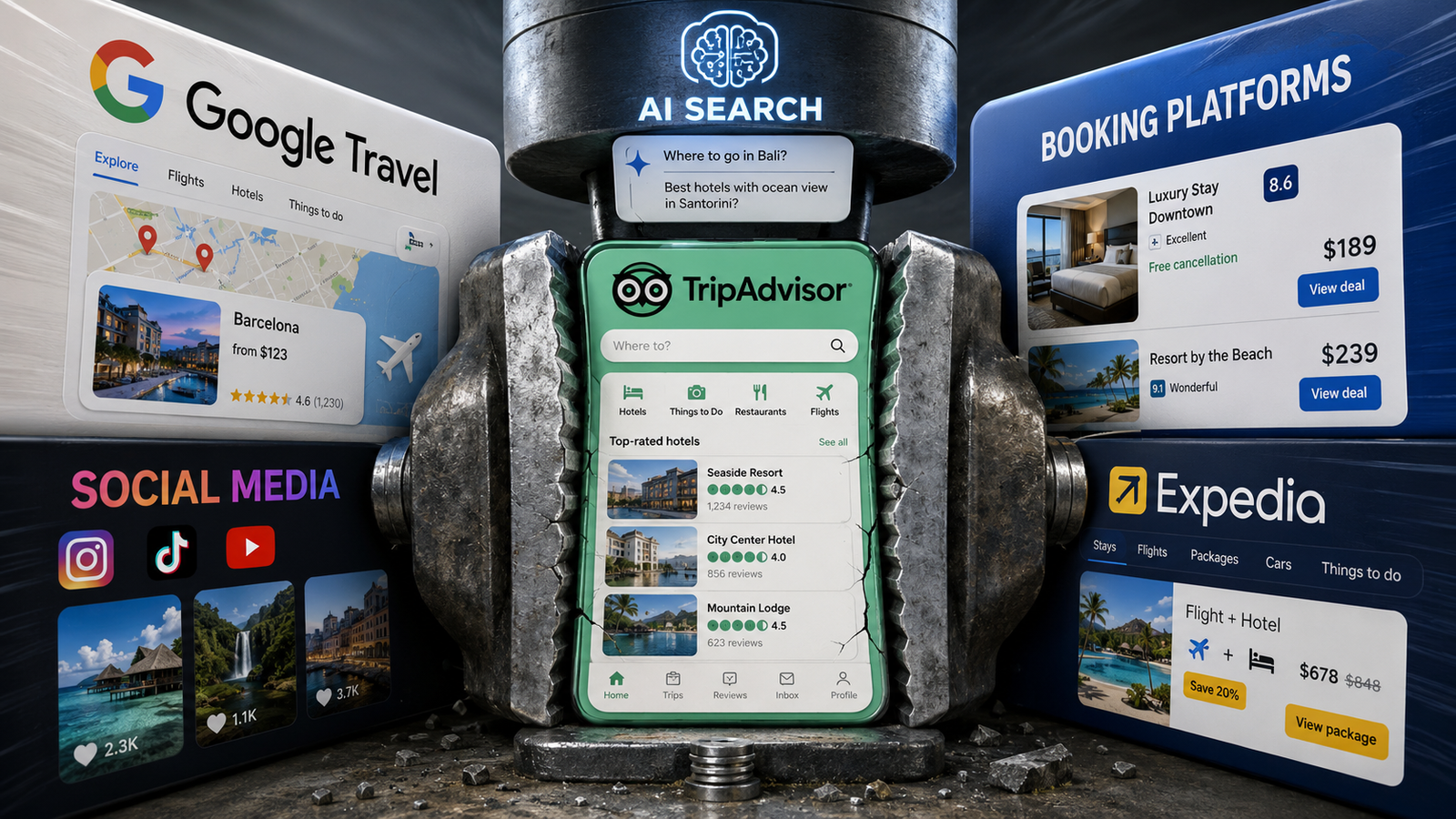
That model still exists, but the internet around it has changed dramatically. TripAdvisor’s own financial filings acknowledge that search engines have increasingly promoted their own products, while AI overviews and changing search behavior have reduced click-through rates. That is corporate language for a fairly simple problem: the traffic pipeline is leaking.

Google Does Not Need TripAdvisor Like It Used To
Search for a hotel today and Google can give you maps, prices, reviews, photos, booking links, availability, and directions without requiring a visit to a traditional travel website. The same thing is happening with AI search. Travelers increasingly get summarized recommendations before clicking anywhere at all.
TripAdvisor spent years benefiting from being the page between Google and the booking company. Now Google increasingly wants to become that page itself. That’s a difficult position for any legacy travel publisher.
Then There Is the Affiliate Question
This is where things get especially interesting for independent travel publishers.
Some publishers reported in 2026 that TripAdvisor’s hotel affiliate availability through third-party affiliate channels had ended, forcing them to replace TripAdvisor links with other booking companies.
TripAdvisor still publicly maintains affiliate information through Commission Junction, so calling the entire TripAdvisor affiliate program dead would go too far.
But cutting affiliate distribution anywhere is worth watching.
Affiliates are performance marketing. A company generally pays them after they produce measurable traffic or revenue. That makes affiliate commissions very different from spending millions on advertising and hoping somebody eventually books something.
When companies start trimming performance partners, it can signal aggressive margin management: not necessarily financial disaster, but certainly a desire to keep more revenue in-house.

TripAdvisor Is Already Cutting Costs
This is not happening in isolation.
TripAdvisor announced restructuring and cost-saving measures designed to produce at least $85 million in annualized savings. The company has also described its traditional hotel business as something it intends to manage with a stronger focus on profitability.
Meanwhile, its Experiences business, built heavily around Viator, has become increasingly important.
That tells you where management sees growth.
The old game was hotel search, reviews, advertising, and outbound clicks.
The newer game is getting travelers to actually book tours, attractions, activities, restaurants, and experiences.
Cutting Publishers Could Backfire
Here is the risk TripAdvisor faces.
Travel publishers do not have to keep sending them traffic.
If an affiliate link stops producing revenue, publishers can replace it. Quickly.
A TripAdvisor hotel link can become an Expedia link, Booking.com link, direct hotel link, or another booking platform before lunch.
Multiply that across thousands of travel websites and suddenly a company has saved some affiliate commissions, but lost thousands of independent distribution points.
That’s the part big platforms sometimes underestimate.
Affiliates are not simply an expense. They are a decentralized sales force.
Cutting them to protect a few percentage points of margin can be like removing your own billboards because electricity got expensive.
TripAdvisor Isn’t Dead… But the Moat Is Smaller
TripAdvisor still has an enormous brand, a massive library of traveler reviews, and valuable travel data. Nobody should confuse pressure with extinction.
But its competitive moat is clearly smaller than it once was.
Google owns much of travel discovery. Booking and Expedia control enormous booking ecosystems. TikTok, Instagram, Reddit, and creators influence trip planning. AI can now summarize dozens of travel recommendations without sending a visitor to the original website.
TripAdvisor is getting squeezed from virtually every direction, and the company’s own strategy shows it knows the old playbook needs to change.
For smaller travel publishers, that creates an opportunity.
Niche sites can offer something giant travel platforms struggle to provide: specific expertise for a specific traveler.
That is exactly why USAWeed focuses on cannabis tourism instead of trying to become another generic travel directory. Travelers looking for cannabis-friendly lodging, dispensaries, tours, and unusual experiences can compare real 420-friendly listings instead of digging through thousands of unrelated travel results.
You can also check our guide to cannabis tourism on a budget when planning your next trip.
The giants may own the broad travel market, but specialized travel information still has plenty of room to grow, especially when users know exactly what they’re looking for.
And when you’re shopping for your next cannabis adventure, explore USAWeed.org to find great, safe, and tested products and verified cannabis-friendly options.